Building Self-Service Platforms That Developers Actually Use

For years I watched the same thing happen at every organisation I worked with. A developer needs a new database, a Kubernetes cluster, or CI/CD runners. They file a ticket with the ops team. The ops team is swamped - they're serving dozens of application teams with a handful of people. The ticket sits in a queue. Days pass. Sometimes weeks. The developer, blocked and frustrated, either finds a workaround (often a bad one) or just waits. Multiply this across every team, and you have an organisation where a huge chunk of engineering time is spent waiting for infrastructure.
Self-service platforms exist to break this cycle. Instead of filing tickets and waiting, developers get access to a portal or CLI where they can provision what they need themselves - within guardrails set by the platform team. This post is about why this shift matters, what I've learned from building these platforms, and the practical lessons that are easy to miss.
The Problem: Ops as a Bottleneck
The traditional setup looks like this: you have application teams who build features and a centralised operations team who manages infrastructure. Developers focus on business logic, ops handles everything underneath. In theory, this separation makes sense - each group does what they're good at.
In practice, it creates a bottleneck. Every time a developer needs something from ops - a new environment, a secret rotated, a firewall rule changed - they raise a ticket. The ops team prioritises tickets based on urgency, which means lower-priority requests pile up. A developer who needs a staging environment might wait three days for something that takes ops fifteen minutes to do. The actual work is fast. The waiting is what kills productivity.
Some organisations try to solve this by hiring more ops people. But it doesn't scale. As the number of application teams grows, the ticket queue grows faster than you can hire. You end up in an arms race between demand and capacity that the ops team will always lose.
The real fix isn't more ops engineers - it's removing the need for most of those tickets in the first place. That's what self-service platforms do. They take the most common requests - provisioning infrastructure, spinning up environments, setting up pipelines - and turn them into automated workflows that developers can trigger themselves.
The Team Topologies Framework
To understand why self-service platforms work, it helps to understand the organisational model that makes them necessary. Matthew Skelton and Manuel Pais lay this out clearly in Team Topologies, and it's a good read if you're thinking about how to structure engineering teams.
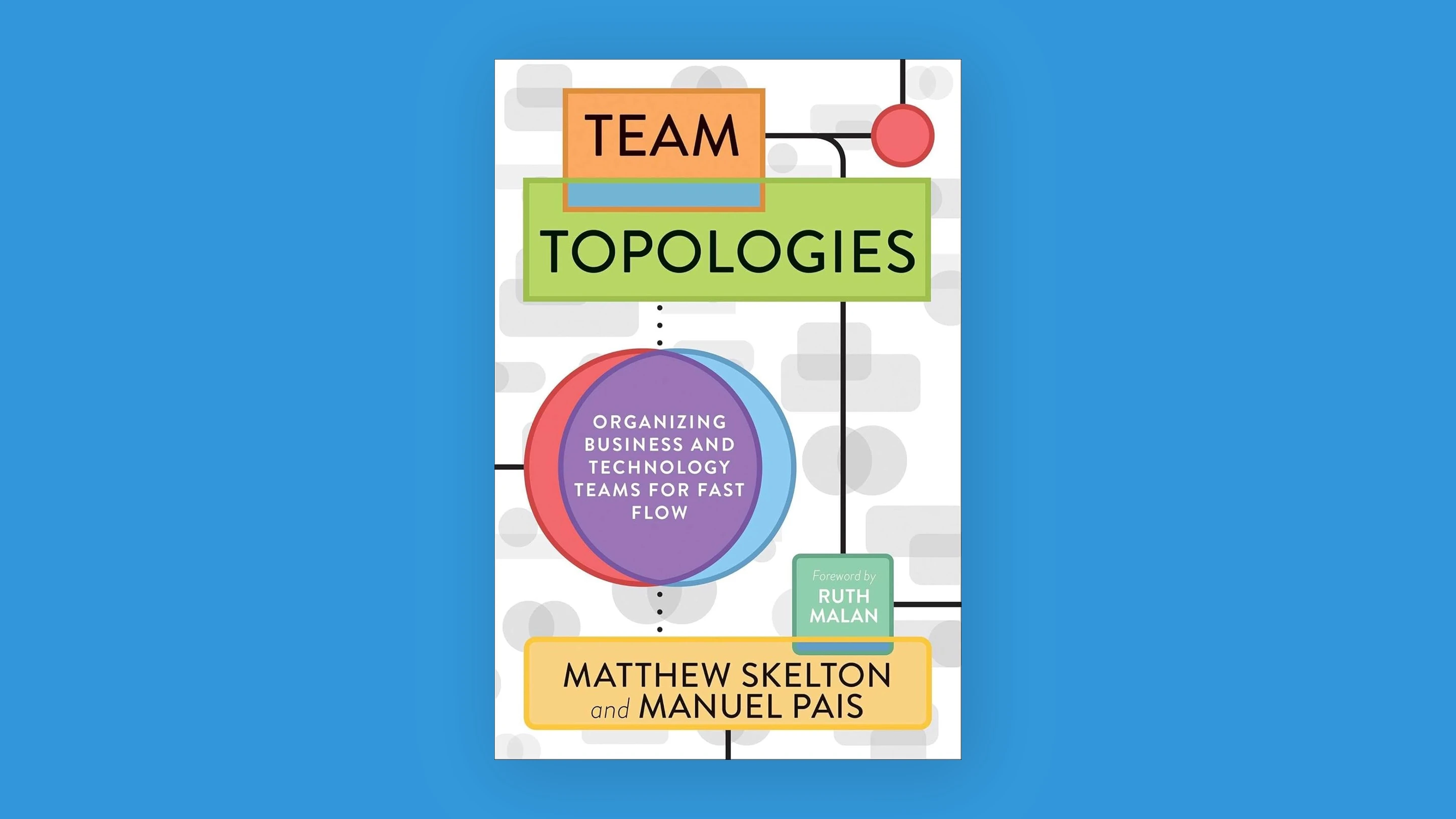
Their starting point is Conway's Law: the idea that the software you build will mirror the communication structure of your organisation. If your teams are siloed, your architecture will be siloed. If your teams collaborate across boundaries, your systems will integrate across boundaries. This isn't a suggestion - it's an observation about how organisations actually work. The insight from Team Topologies is that you can use this deliberately. Instead of letting your org chart accidentally shape your architecture, you design your team structure to produce the architecture you want. They call this the inverse Conway maneuver.
Four Team Types
Skelton and Pais argue that you only need four types of teams to build and run modern software:
- Stream-aligned teams are the primary unit. Each one is responsible for a single stream of work - a product, a service, a user journey. They're full-stack and full-lifecycle: they build it, test it, deploy it, run it. The goal is for these teams to move fast and independently, without waiting on anyone else.
- Platform teams exist to serve stream-aligned teams. They build and maintain internal services - infrastructure, tooling, shared capabilities - that stream-aligned teams consume as self-service. The platform team's job is to make the stream-aligned team's job easier.
- Enabling teams are temporary coaching teams. They help stream-aligned teams learn new skills or adopt new tools, then step back once the team is self-sufficient. They don't write standards and enforce them - they educate and build capability.
- Complicated-subsystem teams own areas that require deep specialist knowledge - things like machine learning models, payment processing engines, or video encoding systems. These would overload a stream-aligned team if embedded directly.
The key insight is how these teams interact. The book defines three interaction modes: collaboration (working closely together, usually temporarily during discovery or integration), X-as-a-Service (one team provides a service, the other consumes it with minimal coordination), and facilitating (the enabling team coaches another team without doing the work for them).
For platform teams, the target interaction mode is X-as-a-Service. Stream-aligned teams should be able to use the platform without needing to collaborate with the platform team for every request. If a developer has to file a ticket or jump on a call with the platform team every time they need something, the platform isn't working - it's just a different flavour of the same bottleneck.
Cognitive Load: The Real Metric
The deeper reason this structure works comes down to cognitive load - the total mental effort a developer has to spend to do their job. Cognitive load has three types. Intrinsic load is the complexity of the work itself - understanding the language, the domain, the algorithms. This is unavoidable, and it's what you want developers thinking about. Germane load is the effort spent on business-specific problems - designing the right solution, making trade-off decisions. This is valuable thinking. Extraneous load is everything else - figuring out how to deploy, navigating inconsistent tooling, hunting for documentation, understanding infrastructure quirks. This is waste.
The purpose of a platform team is to absorb extraneous cognitive load from stream-aligned teams. When a developer doesn't have to think about Kubernetes manifests, Terraform configurations, or CI/CD pipeline syntax - when they can just say "give me a production-ready service" and get one - their mental energy goes to the work that actually matters.
Spotify measured this directly. Before building their internal developer platform, it took a new engineer over 60 days to merge their 10th pull request. After the platform was in place, that dropped to 20 days - a 67% reduction. The engineers weren't suddenly smarter or faster. They were just spending less time fighting infrastructure and more time writing code.
As a developer, you're not waiting so much and you can be autonomous. You can help the business as much as possible because you're not waiting to add value.
The Role of Enabling Teams
One thing that often gets overlooked in platform engineering conversations is the role of enabling teams. You can build the best platform in the world, but if stream-aligned teams don't know how to use it - or don't see why they should - adoption will stall. Enabling teams bridge that gap. They work alongside stream-aligned teams temporarily, helping them adopt the platform, understand the golden paths, and build confidence with the new tooling. Once the team is self-sufficient, the enabling team moves on to the next group. Without this, you're relying on documentation and hope - and documentation alone rarely drives adoption.
The Thinnest Viable Platform
Here's where a lot of teams go wrong. They decide to build an internal developer platform, and immediately start designing a massive portal with dozens of features, plugin systems, and a custom UI framework. Six months later, they have a half-built platform that nobody uses because it doesn't solve the problems developers actually have.
Skelton and Pais have a concept called the Thinnest Viable Platform (TVP) - the smallest set of APIs, tools, and documentation needed to accelerate development. The key word is "thinnest." A TVP could be a CLI that automates three common workflows. It could be a wiki page listing approved services and how to use them. It could be a set of Terraform modules that teams can reference. The point is: don't build anything thicker than necessary.
This is different from a minimum viable product. An MVP is about the initial phase - ship something small, see if it works. A TVP is about the lifetime of the platform - maintain the thinnest version that delivers value, and only add thickness when there's a clear need. It's a mindset of restraint that prevents the platform from becoming the kind of bloated, hard-to-maintain system it was supposed to replace.
Trade Me, New Zealand's largest marketplace, applied this approach with around 200 engineers. Their small squads of 4-5 people were struggling with the cognitive load of managing cloud infrastructure alongside feature work. Instead of building a massive portal, they started with sensible defaults, golden paths for common tasks, and production-readiness guardrails. Time to deploy a new service went from three weeks to one day.
What Actually Worked: Portal + CLI
In my experience, the combination that works best is a self-service portal for visibility and discovery, paired with a CLI for actual execution. Each solves a different problem, and together they cover most of what developers need.
The Portal: Where You Find Things
The portal is your single pane of glass. It's where developers go to find out what services exist, who owns them, where the documentation lives, what the health status is, and how things connect. In a microservices architecture with hundreds of services, this kind of discoverability is essential. Without it, a new joiner spends their first weeks just figuring out what exists and who to ask about it.
The portal is also where you surface golden paths - the recommended way to do common things. Need to create a new service? Here's the template. Need to set up monitoring? Here's the standard configuration. Golden paths aren't mandates - they're suggestions backed by best practices. Paula Kennedy from Syntasso describes them as "proven, empathic patterns" that show teams what good looks like across compliance, governance, and technical domains. Handle the 80% common case beautifully, and provide escape hatches for the remaining 20%.
The CLI: Where You Do Things
The CLI is where the actual self-service happens. Developers don't want to click through a web UI to provision a database - they want to type a command and have it done. A well-designed CLI lets them scaffold a new project from a template, provision infrastructure, deploy to any environment, rotate secrets, and check the status of their services - all from their terminal.
There's an important lesson here: a clunky CLI that automates a three-hour manual process is infinitely more valuable than a beautiful portal that doesn't actually automate anything. I have seen teams spend months building a polished web interface that was essentially a directory of links - no actual self-service capability underneath. Start with the automation, then add the UI. Not the other way around.
Why Both?
Different people use the platform differently. A developer spinning up their fifth service this month wants the CLI - it's fast, scriptable, and fits their workflow. A project manager trying to understand the health of the system wants the portal - visual, browsable, no terminal required. A new joiner trying to understand the architecture needs the portal's catalogue. A senior engineer automating a deployment pipeline needs the CLI's programmatic interface. Building both serves the full range of users.
There's another benefit to this approach: it provides a useful abstraction layer over your code quality tools, security posture management, compliance checks, and other operational tooling. The most common use cases - running a security scan, checking code coverage, viewing compliance status - are surfaced through the portal and CLI where anyone can access them. But you're not restricting power users from accessing the underlying tools directly when they need to. The portal simplifies the 80% case without locking down the remaining 20%.
Treat It Like a Product
This is the single most important lesson I've seen in platform engineering, and the one that's most often ignored: the platform is a product, and your developers are its users.
That means everything you know about building good products applies. You need to understand your users - what are their actual pain points, not what you think their pain points are? You need to prioritise features based on impact, not on what's technically interesting. You need a feedback loop - regular surveys, interviews, usage analytics - so you know what's working and what's not. And you need someone who owns the product vision. The most successful platform teams have a dedicated product manager - about 25% of organisations do this now, and it makes a measurable difference.
Wise (the fintech company) took this seriously when building their developer platform. They ran biannual surveys that revealed specific pain points: developers couldn't find documentation, service ownership was unclear, and navigating the codebase across microservices carried a heavy cognitive load. They followed up with user interviews - a three-person team with a main interviewer, a journey mapper, and a note-taker. The result was detailed user personas and journey maps that guided what they actually built, instead of guessing.
The feeling of being heard and understood is very important.
One thing Wise learned that's worth highlighting: they used wireframes before building anything. Instead of spending weeks coding a feature and hoping developers would like it, they mocked it up, showed it to users, and iterated on the design before writing a line of code. This prevented solution bias - building what the team wanted to build rather than what usersneeded.
Anti-Patterns to Avoid
Having seen several platform engineering efforts succeed and fail, there are common traps that are worth calling out.
Building the Portal First
The most common mistake. Teams spend months building a beautiful developer portal - service catalogue, documentation viewer, dashboards - without automating anything underneath. The portal becomes a fancy directory. Developers visit it once, see that it doesn't actually do anything, and go back to filing tickets. Always start with the backend automation. The portal is the interface to the automation, not a replacement for it.
Mandating Adoption
Telling developers "you must use the platform" kills the feedback loop that makes the platform good. If adoption is mandatory, you'll never know whether people are using it because it's useful or because they have no choice. The platform should earn its users by being the easiest, fastest, safest way to ship code. If it's not, that's feedback you need to hear.
The Field of Dreams Fallacy
"Build it and they will come" does not work for internal platforms. I have seen teams develop a platform in isolation for months, launch it with a big announcement, and get minimal adoption - because it solved technical problems the platform team cared about, not the pain points developers actually had. Start with one or two teams, solve their real problems, demonstrate value, and let word spread organically.
Overengineering on Day One
Multi-cloud abstractions, custom service meshes, a plugin system for everything - all before you have 10 users. Solve today's problems. A simple script that automates environment provisioning is worth more than an architecturally perfect platform that's still six months from being usable.
Rebranding Operations
Renaming the ops team to "platform team" without changing how they work is not platform engineering. If the "platform team" is still processing tickets and manually provisioning infrastructure, you've changed the name but not the problem. Platform engineering requires building products that eliminate the need for those tickets - not just processing them faster.
Not Building Relationships First
Developers are one of the hardest users to sell to. They're sceptical of new tools, they've been burned by internal platforms before, and they can tell immediately if something was built without understanding their workflow. You can't just ship a platform and expect adoption. You need to build relationships with stakeholders across different teams - sit with them, understand their pain points firsthand, earn their trust before asking them to change how they work. The platform teams that succeed are the ones that have champions inside the stream-aligned teams - developers who tried the platform early, found it useful, and advocate for it to their peers. That kind of trust isn't built through documentation or launch emails. It's built through relationships.
Ignoring the Platform Team's Own Cognitive Load
There's an irony that doesn't get talked about enough. Platform engineering reduces cognitive load on developers, but it can transfer that burden to the platform team - a group that's typically smaller and less invested in. Managing dozens of tools, keeping up with new releases, handling compliance and governance, while also building new features for developers - it's a lot. If the platform team burns out, the platform stagnates, and the whole initiative fails. Budget for it. Staff for it. Treat the platform team's experience as seriously as the developer experience.
Measuring Success
You need to know whether the platform is actually working, and the right metrics aren't always obvious.
Don't measure: portal logins, number of plugins, API call volume. These are vanity metrics that tell you activity is happening but not whether value is being delivered.
Do measure:
- Time to first deployment for new joiners. How long from day one until a new developer ships their first change to production? This captures onboarding friction, documentation quality, and platform usability in a single number.
- Ticket volume from dev teams to ops. If the platform is working, this should drop. Measure the reduction, not the resolution time.
- Time to provision common resources. How long does it take to spin up a new service, database, or environment? Compare before and after the platform.
- Developer satisfaction surveys. Ask developers directly: does the platform help you? What's still painful? Some organisations track an internal NPS (Net Promoter Score) for their platform.
- Deployment frequency. Are teams shipping more often? This is a signal that the platform is reducing friction in the delivery pipeline.
Platform Team OKRs
The platform team should have its own OKRs, just like any product team. These shouldn't be about how many features the platform ships - they should be tied to developer outcomes. An objective like "Reduce friction in the development lifecycle" with key results like "Cut average environment provisioning time from 3 days to under 1 hour" or "Reduce ops ticket volume from dev teams by 40%" keeps the team focused on impact, not activity. When the platform team's success is measured by how much easier they make life for stream-aligned teams, the right priorities follow naturally.
Supporting DORA Metrics
A well-built platform directly supports the four DORA metrics that measure software delivery performance: deployment frequency (how often you ship), lead time for changes (how long from commit to production), change failure rate (how often deployments cause incidents), and mean time to recovery (how fast you bounce back from failures). Self-service provisioning and golden path templates improve lead time. Automated guardrails and standardised pipelines reduce change failure rate. Built-in observability and rollback capabilities cut recovery time. The platform doesn't just make developers faster - it makes the entire delivery pipeline more reliable. Tracking DORA metrics before and after platform adoption is one of the clearest ways to demonstrate its value to leadership.
Zepto, an Indian delivery company, tracked onboarding time for new microservices. Before their platform: two days of manual CI/CD configuration, frequent misconfigurations, and dependency on the ops team. After: ten minutes, fully automated, zero ops involvement. That's the kind of before-and-after measurement that makes the value undeniable.
Key Takeaway
The shift to self-service platforms isn't about adopting a specific framework or building a flashy portal. It's about recognising that the traditional ops model - where developers wait for a small team to process their requests - doesn't scale, and building something better.
Start thin. Automate the one or two workflows that generate the most tickets. Build a CLI that developers can use from their terminal. Add a portal when you need discoverability and visibility. Treat the platform like a product - talk to your users, measure what matters, and iterate based on feedback, not assumptions.
And resist the urge to build everything at once. The thinnest viable platform that solves real problems today is worth infinitely more than the perfect platform that's still being designed six months from now. Ship something small, prove it works, and grow from there.
A note: I can see we are fundamentally changing the way we build and use software with the rise of agentic tools. Taking inspiration from Claude Code and the concepts built around it, I'm currently experimenting on building better interfaces for developers. Will update this blog based on the outcomes of that.